Saturday, June 6, 2020

Biafran War loots in Christie's Auction Sale


Wall plaque, Edo Kingdom

On June 28, 2020, Christies, reputedly the world’s premier auction house will have a sale of art from Africa, Oceania and North America. I raise my voice against this sale. As the magazine Quartz has just reported, major auction houses are exploiting the COVID-19 crisis to sell art objects from Africa that are part of colonial-era looting of the continent’s cultural heritage. Among the Christies lot, for instance, is one copper alloy plaque (above) that must have been among the looted objects from the Benin palace. It is shameful that any self-respecting auction house is still involved in the sale of royal Benin objects from that 1897 rape of the palace by British soldiers

Alusi figures from Nri-Awka area, Eastern Nigeria

But here is what I find even more vexing about Christie's sale. 

In a 2017 op-ed article in the New York Times, I wrote about widespread looting of art from Eastern Nigeria during the Biafran War (1967-70), and that my mother still mourns the overnight disappearance of countless sculptures from communal shrines in my hometown, Umuoji, in Anambra State. These art raids from all indications were sponsored by dealers and their client collectors mostly based in Europe and the US. So, apart from the royal Benin wall plaque, the June Christie's auction includes two impressive alusi (sacred sculptures, above) said to have been acquired in 1968-69 in situ by Jacques Kerchache (1942-2001). That is, Mr. Kerchache acquired these sculptures in the Nri-Awka area (a half-hour drive from my hometown) during the darkest years of the Biafran War.  

Dear Christie's, let’s be clear about the provenance of these sculptures you want to sell. While between 500,000 and three million civilians, including babies like me, were dying in the thousands of kwashiorkor and starvation inside Biafra; and while young French doctors were in the war zone establishing what we now know as Doctors Without Borders, their compatriot, Mr. Kerchache, went there to buy up my people’s cultural heritage, including the two sculptures you are now offering for sale. I write this so no one, including Christie's and any potential buyer of these loots from Biafra can claim ignorance of their true provenance. These artworks are stained with the blood of Biafra’s children. Caveat Emptor!

Friday, April 17, 2020

Looted Benin Objects to be Published Online

87440
Standing Figure, Benin Kingdom, c. 17th century
Collection of University of Pennsylvania Museum of Archaeology and Anthropology

In the fight to get museums in Europe and America to take seriously the matter of restituting important African art and cultural objects stolen or looted from the continent in the age of colonialism, there is small but significant progress.
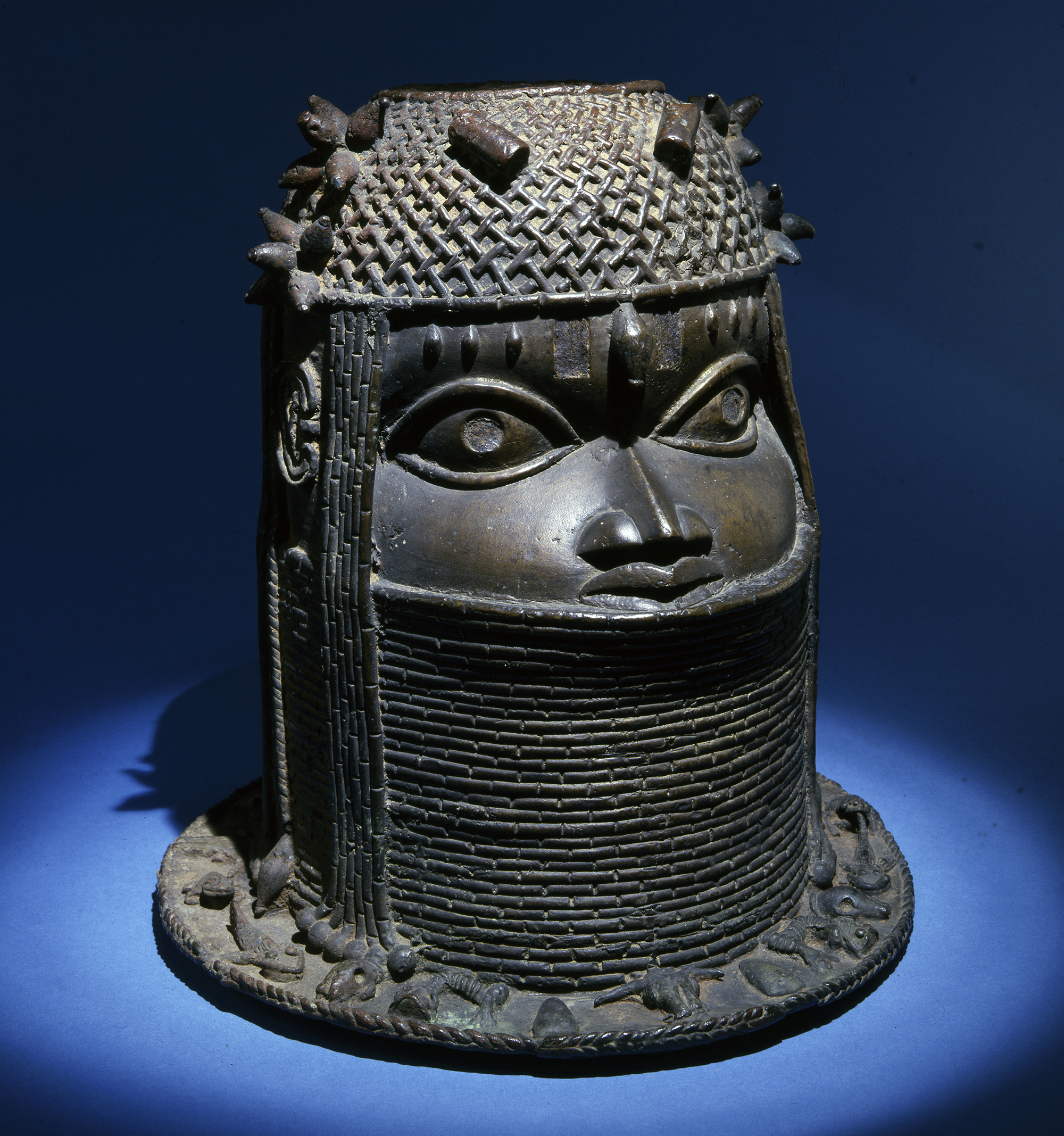
It has just been announced that the Museum am Rothenbaum, Hamburg will publish online all known Benin objects in various media looted by British soldiers in that infamous invasion of the kingdom in 1897. Funded by a generous grant from the Ernst von Siemens art foundation, the project, under the auspices of the Benin Dialog Group, is significant, as it will provide scholars, activists, and institutions interested in the question of the Benin loots--since scattered in major museums around the western world--a comprehensive accounting of who is keeping what of these exiled objects. Until now, such information is buried mostly in barely illustrated scholarly books accessible only to a very small group of academics in universities and museums.
I hope that the goal of this project is to provide images of all the documented works. For with such a visual catalogue, the enormity and scale of that historic plunder of a kingdom will become all the more visibly evident.

Head of an Oba, brass. Collection of Field Museum, Chicago
But, I wonder. As I noted in a post on the subject early last year, the fact that US museums are missing in action is beyond scandalous. Notice that the announcement about the Hamburg project lists only the big European museums with huge caches of the Benin loots, including Hamburg's Museum am Rothenbaum, the British Museum, Berlin’s Ethnology Museum, Vienna’s Weltmuseum and the National Museum of World Cultures in Leiden.
Where the hell are American Museums, including the Metropolitan Museum of Art, Field Museum Chicago, Boston's Museum of Fine Arts, Philadelphia's Penn Museum, and Brooklyn Museum? What are they doing about the looted Benin objects they are keeping in their galleries and vaults? When will they tell us what they intend to do about their own loots?

For more on the Hamburg project, click here

Sunday, March 15, 2020

One Year Ago...

Copyright: Chika Okeke-Agulu
One year ago, today, you left. 
I am, Still picking the shards 
Awaiting your midnight call


Sunday, February 23, 2020

Sidney Kasfir's Memorial Service today, Feb. 23. 2020

Photo: courtesy, Valley News

Today, family, friends, and colleagues of Professor Sidney Littlefield Kasfir, Professor Emerita, at Emory University who died last December will gather at the Canon Chapel, on the university campus in Atlanta, to remember and celebrate her life. This memorial event will start at 1:00PM Eastern and will be live-streamed here:   https://youtu.be/NRUzQ1T0LJY

Wednesday, February 12, 2020

Curator of African Art @ Brooklyn Museum

Curator, African Art
We seek an exceptional communicator and scholar to oversee our curatorial program in the Arts of Africa. The successful candidate will be an engaged curator/scholar with a commitment to our mission and have a proven ability to conceptualize original, canon-expanding, and timely collection and loan exhibitions.
The Curator, African Art plays a key leadership role on our curatorial team and serves as an institutional ambassador, actively engaging with collectors and patrons, professional colleagues, partner institutions, and the Brooklyn community. This is an exceptional and timely opportunity: we are currently in the planning stages to establish a new, permanent gallery dedicated to our renowned collection of African artworks, and have already raised significant support for this project.
The Brooklyn Museum acquired our first works from sub-Saharan Africa in 1900, and today ours is one of the largest collections of African art in the United States, numbering over 6,000 objects and works of art. The core of the collection focuses on the arts of West and Central Africa and was acquired in 1922, and our 1923 display of 1,500 works remains the largest exhibition of African art ever mounted. The collection has since grown to include works spanning more than 2,500 years, with over one hundred different cultures represented.
Requirements:
  • Advanced degree in art history or a related discipline such as Africana studies, anthropology, or history, with a strong knowledge of historical material; Ph.D. or commensurate experience preferred
  • At least five years of experience at a museum, arts non-profit, or other cultural organization, as well as a record of publication
  • Excellent writing and compelling presentation skills
  • Collaborative leadership skills, with the ability to work effectively with the entire Museum team    
  • Strategic thinking and vision to bring our collections alive and excite others in the process, including Board members, donors, and press
  • Deep commitment to engage a wide and diverse audience in innovative and exciting ways
Responsibilities:
  • Assess and rethink our extensive holdings of African art to organize an innovative reinstallation of the entire collection for a new gallery space
  • Research and interpret the collection and participate in cross-departmental exhibitions, installations, and publications, in collaboration with the full curatorial team
  • Conceptualize and produce innovative, canon-expanding exhibitions, both for exhibition at the Brooklyn Museum and for travel to other venues
  • Work with the Shelby White and Leon Levy Director and the Deputy Director/Chief Development Officer to raise support for the new galleries and attract major transformational gifts to build the collection
  • Collaborate with our social media team to promote new acquisitions and collection-related activities and initiatives, to increase media attention and audience engagement
  • Lead scholarly research and writing on the history and interpretation of objects and further research, update, and expand the collection database for online use
  • Advocate for public and educational programming to increase visibility of the Arts of Africa collection and generate public interest
  • Respond to collection inquiries and loan requests as needed
  • Work with the Conservation team to address and remedy specific preservation issues
Start date: Immediately
Department: Arts of Ancient Egypt, Africa, and Asia
Reports to: Director of Collections and Curatorial Affairs
Position type: Full-time
Union status: Non-union
FLSA status: Exempt
Schedule: 35 hours per week, Monday through Friday, 9 am to 5 pm
Apply online

Monday, January 13, 2020

2020 Igbo Conference : Igbo Mobilities

THE 9TH ANNUAL INTERNATIONAL IGBO CONFERENCE
JOIN US FOR OUR FIRST CONFERENCE IN NIGERIA
IGBO MOBILITIES : People, Trade & Knowledge
Theme: Exploring the financial, cultural, intellectual impact and influence of the Igbo both locally and globally.

DATE: 2nd – 4th July, 2020
VENUE: Princess Alexandra Auditorium (PAA),
 The University of Nigeria, Nsukka, Nigeria
#nsukka2020 | #igbomobilities | #igboconference
( Click here to download the pdf version )
The Igbo Conference is an annual international conference usually held at SOAS, University of London. The aim of the Igbo Conference is to encourage and promote Igbo Studies in the UK and beyond. In recognition of the limited avenues for Igbo language and cultural studies available in British Universities, the Igbo Conference seeks to provide a forum for intellectual and cultural exchange between scholars, students and members of the community.

As our conference serves as a unique bridge between the community and academia, each year we also include interactive sessions, masterclasses and workshops in our programme. In the last eight years, the conference has created discussions amongst contributors from all over the world. The ninth instalment of the Igbo Conference will be held in Nigeria for the first time at the University of Nigeria, Nsukka.

Igbo Mobilities: People, Trade and Movement
The study of ‘mobilities’ centres on the movement of people, goods and ideas. It explores the circumstances that bring about this movement, as well as the constraints to and the wider socio-political implications of this movement. We invite conference participants to engage with the concept of mobilities in relation to the Igbo experience in the pre-colonial, colonial and post-independence eras.

The Igbo have developed and sustained a reputation centering on their participation in commerce within Nigeria and abroad. The international dimensions to Igbo business practices provides one example of an Igbo-centred approach to the study of mobilities. The movement of people and goods along the river Niger was central to the development of cities in Igboland, and contributed to the development of the largest market in West Africa situated in Onitsha. Taking a historical view of mobilities, we encourage papers which examine the changing migratory patterns, trade routes and forms of knowledge exchange that have come about through Igbo mobilities.

In an increasingly networked and globalised world, we are interested in exploring the financial, cultural and intellectual impact and influence of the Igbo ‘abroad’ and at ‘home’. This conference encourages a broad view on the usage of ‘mobilities’, encouraging contributions which look both at movement and exchange between the Igbo and their neighbours as well as the Igbo presence in our globalised world.

ORGANISERS : The Igbo Conference, in partnership with:
– The Institute of African Studies, University of Nigeria, Nsukka
– Centre for African Studies, SOAS, University of London
– City, University of London

The Igbo Conference
We invite papers that examine a variety of approaches to Igbo mobilities which include, but are not limited to:

• Igbo entrepreneurship and transnational business
• Military rule and the ‘brain drain’
• The ‘been-to’ figure in literature & film
• Diaspora writing, music & film
• Igbo music in the local and global market
• Igbo language and cultural presence in digital spaces
• Traversing national borders: issues of migration
• Hometown associations
• Xenophobia and Igbo communities abroad
• Igbo mobilities within Nigeria
• Nollywood films & their global circulation: iROKOtv, DStv & Netflix
• The river Niger & movement across West Africa
• Medicine and Health Matters
• Refugees & the Nigeria-Biafra war
• Igbo cultural production & the global market
• Igbo spirituality in the Americas
• Igbo language: differences in dialect & language in motion
• Igbo knowledge production & knowledge exchange
• The literature of Igbo writers in translation
• Trade and the development of Igbo towns & cities: Onitsha, Aba & Abiriba
• The Nsukka school of art & international gallery spaces
• Igbo Business incubation systems and Apprenticeship

Organisers: The Igbo Conference, in association with the Institute of African Studies, University of Nigeria Nsukka; SOAS University of London and City, University of London

Venue: The conference will be held at the University of Nigeria, Nsukka, from July 2-4, 2020 at the Princess Alexandra Auditorium (PAA).

Participants are welcome to present in English or Igbo, but if presenting in Igbo we ask that that an English Language translation is provided as well.
The Institute of African Studies, University of Nigeria, Nsukka Centre for African Studies, SOAS, University of London and City, University of London

The Igbo Conference
We invite papers that examine a variety of approaches to Igbo mobilities which include, but are not limited to:

• Igbo entrepreneurship and transnational business
• Military rule and the ‘brain drain’
• The ‘been-to’ figure in literature & film
• Diaspora writing, music & film
• Igbo music in the local and global market
• Igbo language and cultural presence in digital spaces
• Traversing national borders: issues of migration
• Hometown associations
• Xenophobia and Igbo communities abroad
• Igbo mobilities within Nigeria
• Nollywood films & their global circulation: iROKOtv, DStv & Netflix
• The river Niger & movement across West Africa
• Medicine and Health Matters
• Refugees & the Nigeria-Biafra war
• Igbo cultural production & the global market
• Igbo spirituality in the Americas
• Igbo language: differences in dialect & language in motion
• Igbo knowledge production & knowledge exchange
• The literature of Igbo writers in translation
• Trade and the development of Igbo towns & cities: Onitsha, Aba & Abiriba
• The Nsukka school of art & international gallery spaces
• Igbo Business incubation systems and Apprenticeship

Organisers: The Igbo Conference, in association with the Institute of African Studies, University of Nigeria Nsukka; SOAS University of London and City, University of London

Venue: The conference will be held at the University of Nigeria, Nsukka, from July 2-4, 2020 at the Princess Alexandra Auditorium (PAA).

Participants are welcome to present in English or Igbo, but if presenting in Igbo we ask that that an English Language translation is provided as well.
Please submit abstracts of up to 250 words including the paper title, your name, current position, institutional affiliation (where applicable), email address and phone number no later than 31st January 2020. To submit visit www.igboconference.com/submit and follow the directions.
We cannot guarantee that abstracts submitted via email will be read / considered. Please submit your abstract via the submission page at www.igboconference.com/submit
Panel Submissions

Sunday, December 8, 2019

Associate Professor of Sociology/Anthropology, Dept. of African-American and African Diaspora Studies, Columbia University

The newly established Department of African-American and African Diaspora Studies (AAADS) at Columbia University invites applications for a tenure track or tenured position at the level of Associate Professor to begin on July 1, 2020. AAADS welcomes applicants in anthropology or sociology whose work in the United States and/or elsewhere in the African Diaspora cuts across fields and disciplines in areas including—but not limited to—Black migration, transnational communities, and internationalism; Black feminism and/or LGBT studies; and, urban social movements, political economy, and racial formation. The successful applicant must demonstrate a robust research agenda in Black urban studies and be willing to teach and mentor students at the
undergraduate, Master’s, and Ph.D. levels. This is also an opportunity to participate in the development and implementation of AAADS’s Ph.D. program.

Applicants should send a cover letter, curriculum vitae, three letters of recommendation, and a publication sample. The search committee will begin reviewing applications on December 10, 2019, and will continue to consider applications until the position is filled.

For more information and to apply, please go to:
http://pa334.peopleadmin.com/postings/XXXX

The search committee is especially interested in candidates, who through their teaching, research, and service, will contribute to the diversity and excellence of the academic community. Columbia University is an Equal Opportunity/Disability/Veteran employer.